

Daycare providers are often the first to respond when a child chokes, stops breathing, or suffers a serious injury. State licensing requirements across the country mandate that childcare staff hold current first aid and CPR certification, but not all training programs are created equal. Some focus on adult emergencies, others lack pediatric-specific content, and many don't offer the scheduling flexibility that busy childcare centers need.
Whether you are a center director looking to certify your entire staff, a family daycare provider working toward licensing compliance, or an individual childcare worker building your credentials, this guide covers the top first aid training programs for daycare providers in 2026. Each option was evaluated on pediatric content depth, certification acceptance, scheduling flexibility, and overall value.
One important note before you dive in: licensing requirements vary by state in terms of accepted certifying organizations, number of certified staff required, and renewal frequency. Always verify your specific state's requirements with your licensing agency before enrolling in any program.
1. Midwest CPR Center
Best for: Daycare centers and childcare staff seeking hands-on, instructor-led training with group and onsite scheduling options.
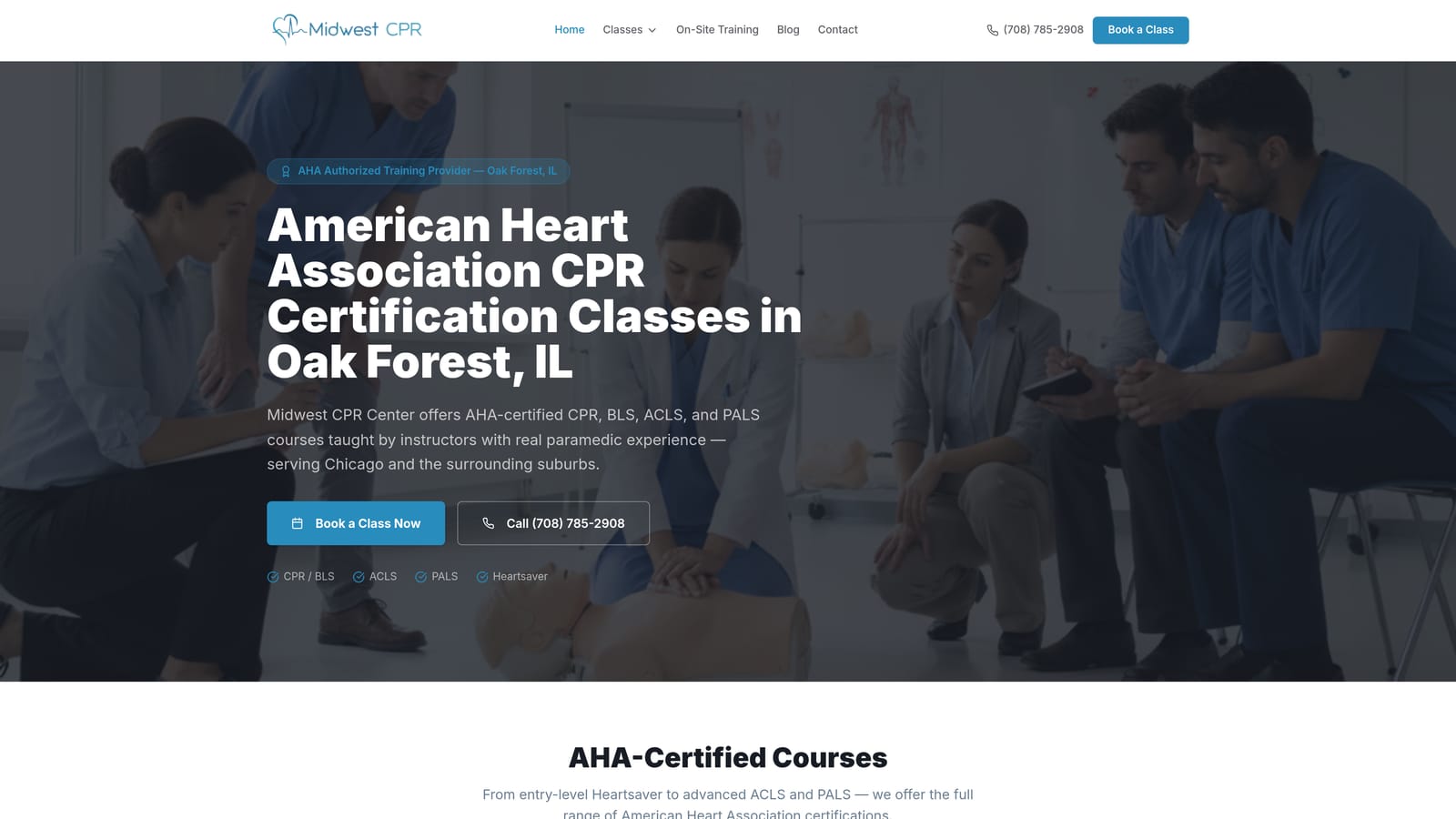
Midwest CPR Center is a Midwest-based training provider offering instructor-led CPR, First Aid, AED, and BLS certification courses with pediatric content built in.
Where This Tool Shines
For childcare centers that need to certify multiple staff members at once, Midwest CPR Center's group and onsite training options are a practical advantage. Rather than sending employees to a public class on different days, center directors can schedule a session at their facility and get the whole team certified together.
The hands-on, instructor-led format is particularly well-suited to daycare providers. Practicing infant and child CPR on mannequins with a certified instructor in the room builds the kind of muscle memory and confidence that watching a video simply cannot replicate. Pediatric content is included in relevant courses, covering the scenarios childcare staff are most likely to encounter.
Key Features
Hands-On Instructor-Led Format: All training is delivered in person with certified instructors, giving participants the opportunity to practice skills directly.
Pediatric CPR and First Aid Content: Courses include pediatric-specific scenarios relevant to childcare settings, not just adult emergency response.
Group and Onsite Training: Childcare centers can schedule training at their location, making it easier to certify entire staff teams without disrupting operations.
AED Training Included: Relevant courses incorporate AED training alongside CPR and first aid skills.
Licensing Compliance Focus: Certifications are designed with state childcare licensing requirements in mind, helping centers stay compliant.
Best For
Center directors managing staff certification across multiple employees, family daycare providers who want hands-on skill practice, and childcare workers in the Midwest who prefer learning in a structured, in-person environment. Particularly strong for teams that want onsite convenience without sacrificing instruction quality.
Pricing
Contact Midwest CPR Center directly for group and individual pricing. Onsite group training rates are available for childcare centers looking to certify multiple staff members at once.
2. American Red Cross
Best for: Childcare providers seeking a widely recognized pediatric-specific certification with flexible blended learning options.
American Red Cross is a nationally recognized nonprofit offering a dedicated Pediatric First Aid/CPR/AED course designed specifically for childcare providers.
Where This Tool Shines
The Red Cross has built its Pediatric First Aid/CPR/AED course around the real scenarios childcare staff face, including infant and child choking response, respiratory distress recognition, and age-appropriate CPR technique. This isn't a generic adult course with a pediatric module tacked on at the end.
The blended learning format is a genuine benefit for busy providers. Participants complete the knowledge portion online at their own pace, then attend a shorter in-person skills session to practice and get checked off. This reduces the total classroom time required while preserving the hands-on component that state agencies typically require.
Key Features
Dedicated Pediatric Course: The Pediatric First Aid/CPR/AED course is built specifically for childcare settings, not adapted from an adult curriculum.
Blended Learning Format: Online study combined with an in-person skills session gives providers scheduling flexibility without skipping hands-on practice.
Wide Licensing Acceptance: Red Cross certifications are accepted by state childcare licensing agencies across the country.
Group Training Options: Childcare centers can arrange group training sessions for their staff.
Two-Year Certificate Validity: Certificates remain valid for two years, aligning with common state renewal requirements.
Best For
Childcare providers who want a nationally recognized certification with broad state acceptance and the option to complete part of the coursework on their own schedule. Also a strong choice for centers that want to organize group training without bringing an instructor onsite.
Pricing
Pricing varies by location and course format. Group rates are available for childcare centers. Check the Red Cross website or contact a local chapter for current pricing in your area.
3. American Heart Association (AHA)
Best for: Providers who need a gold-standard certification recognized by state licensing agencies and healthcare employers alike.
American Heart Association offers the Heartsaver Pediatric First Aid CPR AED course through a nationwide network of authorized training centers.
Where This Tool Shines
When childcare licensing agencies specify which certifications they accept, the AHA Heartsaver Pediatric course is almost always on that list. Its reputation among both licensing bodies and healthcare employers makes it one of the most universally accepted credentials a childcare provider can hold.
The course covers comprehensive pediatric content, and the AHA's evidence-based guidelines are updated regularly to reflect current best practices. For providers who work in or adjacent to healthcare settings, or who want a credential that carries weight beyond childcare licensing, the AHA certification is a strong investment.
Key Features
Heartsaver Pediatric First Aid CPR AED Course: A comprehensive course covering pediatric CPR, first aid, and AED use with content grounded in AHA guidelines.
Nationwide Training Network: Available through authorized training centers across the country, making it accessible in most regions.
High Licensing Recognition: Widely accepted by state childcare licensing agencies and healthcare employers.
Blended Learning Option: Some authorized centers offer a blended format combining online preparation with an in-person skills session.
Two-Year Certificate Validity: Aligns with standard state renewal timelines for childcare licensing compliance.
Best For
Childcare providers who want the most broadly recognized certification available, particularly those working in states with strict licensing requirements or those who also work in healthcare-adjacent roles. Ideal when you want a credential that opens doors beyond daycare licensing alone.
Pricing
Pricing varies by authorized training center and location. Contact local AHA training centers directly for current rates and group options.
4. National Safety Council (NSC)
Best for: Larger childcare centers looking to bundle first aid, CPR, and AED training into a comprehensive workplace safety program.
National Safety Council is a leading safety organization offering first aid, CPR, and AED courses that include pediatric modules with strong employer recognition.
Where This Tool Shines
The NSC's strength is its workplace safety framework. For childcare centers that want to approach staff certification as part of a broader safety compliance program rather than a standalone requirement, the NSC's bundled course options make that straightforward. Courses can be combined to address multiple compliance needs at once.
NSC certifications carry strong recognition among employers, which is useful for childcare directors who hire staff from outside the early childhood education sector. The instructor-led format ensures that hands-on skill practice is part of every session.
Key Features
Pediatric Content Included: First aid, CPR, and AED courses incorporate pediatric modules alongside adult content.
Employer and Licensing Recognition: NSC certifications are recognized by employers and many state licensing agencies.
Instructor-Led Format: All training is delivered by instructors, preserving the hands-on practice component.
Bundled Course Options: Multiple courses can be combined to address comprehensive workplace safety compliance requirements.
Group Training Available: Suitable for certifying larger childcare center staff teams in a single organized session.
Best For
Larger childcare organizations, Head Start programs, or center directors who want to integrate first aid and CPR certification into a broader workplace safety training initiative. Also a practical choice for centers with diverse staff backgrounds who need a universally respected credential.
Pricing
Pricing varies by course and location. Group pricing is available. Contact NSC or check their website for current rates in your area.
5. Protrainings
Best for: Providers in rural areas or with irregular schedules who need a fully online, self-paced certification option.
Protrainings is an online training platform offering OSHA-compliant, self-paced pediatric first aid and CPR courses with instant digital certificate delivery.
Where This Tool Shines
For family daycare providers or childcare workers in areas where in-person classes are hard to access, Protrainings removes the logistical barriers entirely. Courses are completed online at whatever time works, and the digital certificate is available immediately upon completion. There's no waiting for a class date, no commute, and no scheduling coordination with a training center.
The OSHA-compliant course content is a meaningful distinction for providers whose centers have broader workplace safety obligations. That said, providers should confirm with their specific state licensing agency that online-only certifications are accepted before enrolling. Some states require an in-person skills component for childcare licensing compliance.
Key Features
Fully Online and Self-Paced: Complete coursework on your own schedule without attending an in-person session.
OSHA-Compliant Content: Course material meets OSHA standards, which is relevant for centers with workplace safety compliance requirements.
Instant Digital Certificate: Certificates are issued digitally upon course completion, with no waiting period.
Accessible for Remote Providers: A practical option for childcare workers in rural or underserved areas without nearby training centers.
Lower Cost: Generally more affordable than comparable in-person training programs.
Best For
Individual childcare workers or family daycare providers in rural areas, providers seeking affordable recertification, and those with schedules that make attending a fixed-time class difficult. Always verify state licensing acceptance of online-only certification before enrolling.
Pricing
Generally lower cost than in-person alternatives. Check the Protrainings website for current course pricing and any available bundles.
6. Safe Kids Worldwide
Best for: Childcare providers looking for free or low-cost supplementary child safety education resources to complement a core certification.
Safe Kids Worldwide is a nonprofit organization dedicated to child injury prevention, offering free and low-cost educational resources, toolkits, and training materials focused on pediatric safety.
Where This Tool Shines
Safe Kids Worldwide fills a different role than the other programs on this list. Rather than offering a certification course, it provides educational resources that deepen a childcare provider's understanding of child safety topics. The focus on choking prevention, safe sleep practices, and injury prevention makes it particularly relevant for daycare settings where these risks are present daily.
For center directors who want to build a culture of child safety beyond the basics of a certification class, Safe Kids Worldwide materials can support staff meetings, parent education sessions, and ongoing professional development. The free-to-low-cost pricing makes it accessible for programs with limited budgets.
Key Features
Free and Low-Cost Resources: Most educational materials, toolkits, and resources are available at no or minimal cost.
Choking and Injury Prevention Focus: Content specifically addresses the child safety scenarios most relevant to childcare environments.
Supplementary Education Materials: Toolkits and resources that support staff training and parent communication.
Nonprofit Mission: All programming is driven by a child safety mission rather than a commercial focus.
Community Awareness Campaigns: Access to broader child safety awareness initiatives and community education programs.
Best For
Center directors who want to build ongoing child safety education into their program beyond a once-every-two-years certification renewal. Best used alongside, not instead of, a hands-on first aid and CPR certification for licensing compliance purposes.
Pricing
Free to low cost for most resources and materials. Check the Safe Kids Worldwide website for specific program availability in your region.
7. ECSI (Emergency Care and Safety Institute)
Best for: Larger childcare organizations, Head Start programs, and school-age care providers seeking a structured curriculum with broad licensing recognition.
ECSI is a training institute offering a Pediatric First Aid course recognized by multiple state childcare licensing agencies, with instructor-led and blended delivery options.
Where This Tool Shines
ECSI's Pediatric First Aid course is built for organizations rather than individual providers. The structured curriculum ensures consistent content delivery across multiple instructor sessions, which matters when you're certifying a large team and need every employee to receive the same quality of training. Head Start centers and school-age care programs in particular have found ECSI's course structure to be a practical fit.
Being part of the Jones and Bartlett Learning educational network gives ECSI credibility in both the healthcare education and early childhood sectors. The blended delivery option provides some scheduling flexibility for organizations that can't always gather the full team in one place.
Key Features
Pediatric First Aid Course: A dedicated course with pediatric content recognized by multiple state childcare licensing agencies.
Instructor-Led and Blended Options: Delivery flexibility to accommodate different organizational needs and schedules.
Structured Curriculum: Consistent content delivery across sessions, important for large teams and multi-site organizations.
Recognized by Licensing Agencies: Accepted by multiple state childcare licensing bodies, though providers should verify acceptance in their specific state.
Suited for Larger Organizations: Designed to scale across Head Start centers, school-age care programs, and multi-classroom childcare facilities.
Best For
Larger childcare organizations, Head Start programs, and multi-site childcare providers that need a scalable, structured certification program with broad licensing recognition. Less suited to individual family daycare providers looking for a quick, accessible option.
Pricing
Pricing varies by delivery method and location. Contact ECSI directly for current rates and organizational pricing options.
8. Save a Life Certifications (SALC)
Best for: Individual childcare workers seeking an affordable, hybrid recertification option with quick certificate turnaround.
Save a Life Certifications is a hybrid blended-learning provider offering pediatric CPR and first aid training that combines online coursework with a brief in-person skills verification session.
Where This Tool Shines
SALC's hybrid model is designed to make recertification as frictionless as possible. Providers complete the knowledge-based coursework online, then attend a short in-person skills check rather than a full-length classroom session. This cuts down on time away from work while still preserving the hands-on component that many state licensing agencies require.
The accessible price point makes SALC a realistic option for individual childcare workers who are covering their own recertification costs. Certificates are available quickly after completion, which is helpful for providers working against a licensing renewal deadline.
Key Features
Hybrid Blended-Learning Model: Online coursework paired with a brief in-person skills verification session, reducing total classroom time.
Pediatric CPR and First Aid Content: Pediatric-specific scenarios are included in the course curriculum.
Accessible Pricing: Generally affordable for individual providers covering their own certification costs.
Quick Certificate Turnaround: Certificates are issued promptly after successful completion of the skills verification.
Practical for Renewal: Particularly useful for experienced providers who need to renew an existing certification efficiently.
Best For
Individual childcare workers seeking cost-effective recertification, especially those who already have foundational knowledge and want an efficient renewal process. As with any online or hybrid program, verify state licensing acceptance before enrolling.
Pricing
Generally affordable. Check the Save a Life Certifications website for current course rates and any available discounts.
9. ChildCare Education Institute (CCEI)
Best for: Early childhood educators building a professional development portfolio with health and safety CEU credits alongside a core certification.
ChildCare Education Institute is a professional development platform designed specifically for the early childhood education sector, offering online health and safety courses with CEU credits.
Where This Tool Shines
CCEI occupies a unique position on this list. It is not a CPR or first aid certification provider in the traditional sense, but it offers something the other programs don't: professional development courses tailored entirely to the early childhood education context, with CEU credits that count toward professional portfolios and some state licensing requirements.
For childcare directors and lead teachers who are building credentials beyond basic certification, CCEI's health and safety courses cover emergency response, health practices, and child safety topics in depth. Used alongside a hands-on first aid and CPR certification, CCEI rounds out a provider's professional training in a meaningful way.
Key Features
Early Childhood Education Focus: All courses are designed specifically for childcare professionals, not adapted from general health or safety curricula.
CEU Credits Available: Courses carry continuing education unit credits for professional development portfolios and some licensing requirements.
Health and Safety Course Content: Topics include emergency response, health practices, and child safety relevant to daycare settings.
Fully Online: Courses are completed online, making them accessible for providers with varied schedules.
Subscription and Per-Course Options: Flexible enrollment structures for individuals and organizations.
Best For
Lead teachers, center directors, and early childhood professionals who want to deepen their health and safety knowledge and earn CEU credits as part of ongoing professional development. Must be paired with a hands-on first aid and CPR certification for full licensing compliance.
Pricing
Subscription and per-course pricing available. Check the CCEI website for current rates and any organizational pricing options.
Which Program Is Right for Your Childcare Setting
The best first aid training program for your daycare depends on your role, your team size, and your state's specific requirements. Here's a quick way to think through your options.
If you are a center director certifying a full staff team, Midwest CPR Center's group and onsite training is built for exactly that scenario. The hands-on, instructor-led format ensures every staff member gets real skill practice, and scheduling a session at your facility keeps the process organized and efficient.
If you need a nationally recognized credential with the broadest possible acceptance, the American Heart Association's Heartsaver Pediatric course or the American Red Cross Pediatric First Aid/CPR/AED course are the two most universally accepted options across state licensing agencies.
If you are an individual provider managing your own recertification costs, Save a Life Certifications or Protrainings offer more affordable paths. Just confirm your state's acceptance of hybrid or online formats before you enroll.
If you want to build a deeper professional development portfolio alongside your certification, pairing a hands-on course with CCEI's health and safety coursework gives you both the compliance credential and the continuing education credits that advance your career.
Whatever program you choose, the most important step is taking action before an emergency happens. Pediatric first aid and CPR skills are most effective when they're practiced, not recalled under pressure for the first time. Schedule your CPR certification class now and give yourself and your team the confidence to respond when it matters most.