
Choosing a CPR provider is mostly a question of who has to accept your card. This comparison is for nurses and other clinicians, teachers and childcare staff, safety managers, and anyone certifying a team. Providers were chosen on four criteria: curriculum authority, acceptance by employers and licensing boards, course formats, and how openly they handle cost and card validity.
Quick Comparison of the Providers
- Midwest CPR Center: best for Midwest individuals, healthcare workers, and employers wanting local hands-on training; pricing listed on its website; offers the full range of CPR, First Aid, AED, and BLS courses with a regional, community focus.
- American Heart Association (AHA): best for nurses, physicians, EMS, and students needing clinically accepted BLS; price set by each Training Center; the most widely accepted clinical BLS and advanced life support credentials.
- American Red Cross: best for teachers, childcare staff, lifeguards, and workplace responders; price varies by course and format; the strongest public brand and an easy course finder.
- American Safety & Health Institute (ASHI): best for employers arranging on-site group training; quote-based; instructor-led workplace programs delivered by independent training companies.
- National CPR Foundation: best for learners whose employer permits online-only certification; pricing listed on its website; fully self-paced courses with fast certificate access.
- Emergency Care & Safety Institute (ECSI): best for community groups and small organizations; quote-based, set by the local instructor; materials built for lay rescuer training.
- National Safety Council (NSC): best for safety managers building workplace emergency programs; pricing listed on its website; an occupational safety focus that fits compliance programs.
- Health & Safety Institute (HSI / MEDIC First Aid): best for childcare providers and school staff; price varies by training provider; blended learning built around schools and childcare.
1. Midwest CPR Center
Midwest CPR Center is a Midwest-based training provider offering CPR, First Aid, AED, BLS, and healthcare provider courses taught by certified instructors. It is designed for local learners who want to practice on manikins with an instructor in the room, whether they are individuals, clinicians renewing a credential, or employers certifying staff.
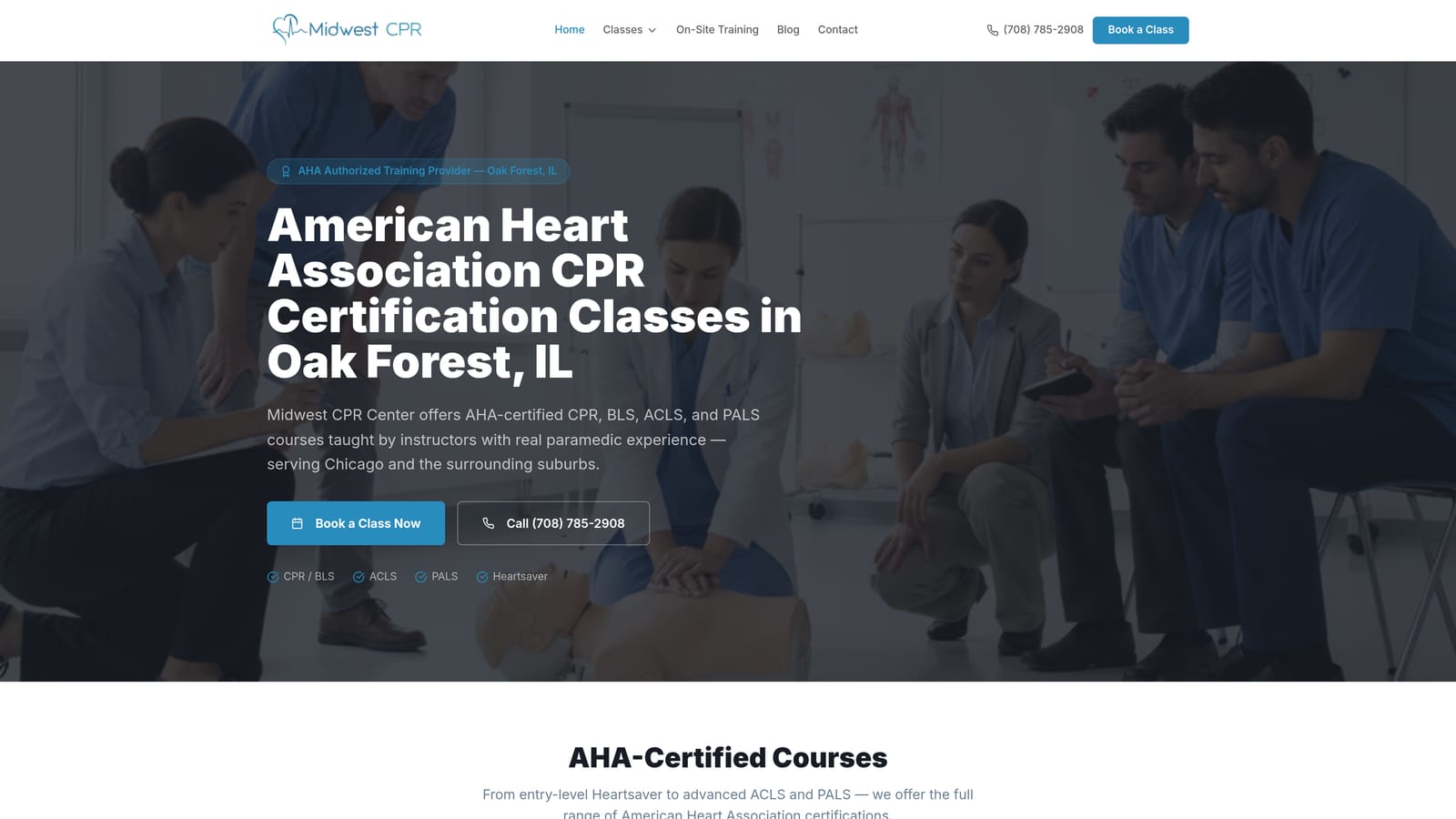
What sets it apart on this list is the combination of breadth and locality. Most national bodies publish standards and rely on a network of sites; here you get a community-focused provider covering lay rescuer courses and healthcare-level training in one place, which simplifies things when a workplace has both clinical and non-clinical staff.
- CPR certification courses that teach adult, child, and infant response with hands-on practice.
- First Aid training for workplaces, schools, and families that need broader emergency skills.
- AED training so responders are comfortable using a defibrillator before they need one.
- BLS certification for healthcare-level CPR and team-based resuscitation.
- Healthcare provider training programs aimed at clinical staff who must meet job requirements.
Group and employer training arrangements are available, but confirm scheduling, on-site options, and minimum class sizes with the company directly. Day-to-day, the learner or the employer's HR or safety lead simply books a class; there is no software to deploy.
The main limitation is geography. A regional provider is not the right fit for learners outside the Midwest, and anyone pursuing a clinical credential should verify the card issuer and confirm that their employer or licensing board accepts it before enrolling. Pricing is published on the company's website and may change, so check current rates there.
Best for: Midwest individuals, healthcare workers, and employers wanting local hands-on training.
2. American Heart Association (AHA)
The American Heart Association sets the resuscitation guidelines many other providers build on, and it is the credential most hospitals name in job postings. It serves clinicians and students who need BLS, ACLS, or PALS, as well as lay rescuers through Heartsaver courses.
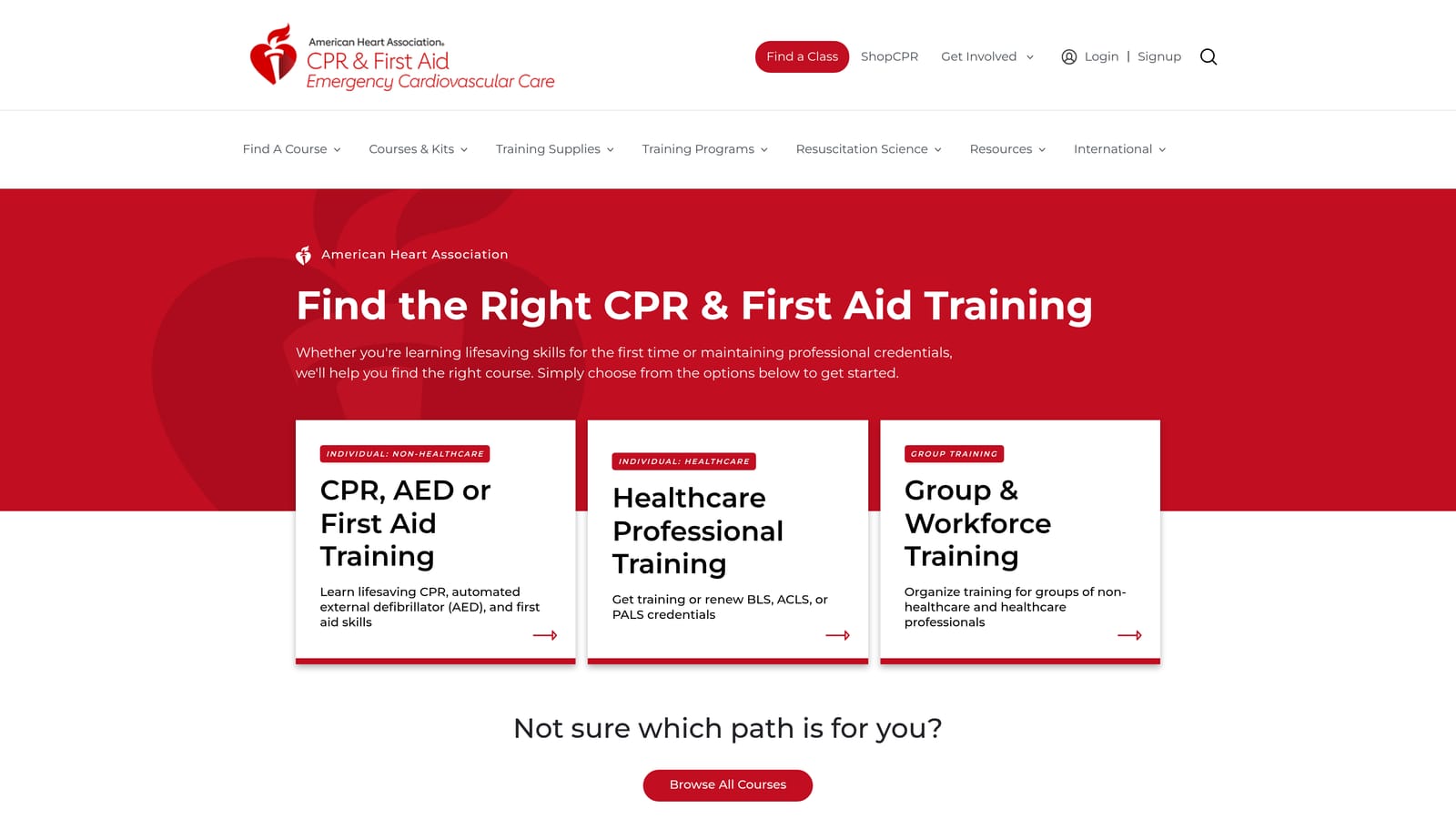
Its distinguishing strength is near-universal acceptance for clinical BLS and advanced life support. If a nursing program, hospital, or state board asks for "AHA BLS," nothing else on this list substitutes with the same certainty.
One common misconception is that the AHA teaches every class itself. In practice, courses are delivered by authorized Training Centers and instructors, which is why experience and pricing differ from site to site.
- BLS for healthcare providers, covering high-quality compressions, bag-mask ventilation, and team resuscitation.
- Heartsaver courses for lay rescuers such as teachers, coaches, and office staff.
- ACLS and PALS for clinicians managing adult and pediatric cardiac emergencies.
- HeartCode blended learning, which moves the cognitive portion online and leaves a hands-on skills session.
- An authorized instructor network that lets you find a class near you.
Setup is simple for individuals: choose a format, find an authorized site, and attend the skills session. Employers with large clinical staffs usually work through a Training Center.
The drawback is that there is no single national price. Learners must locate an authorized site, compare fees, and confirm the format they need, since a fully online course without a skills check will not satisfy most clinical requirements. Card validity is commonly two years, but confirm the current period when you register.
Best for: Nurses, physicians, EMS, and students needing clinically accepted BLS.
3. American Red Cross
The American Red Cross is the provider most people recognize, offering First Aid, CPR, AED, and BLS in online, blended, and classroom formats. It is designed for workplace and community learners who want a trusted name and an easy path to a class.
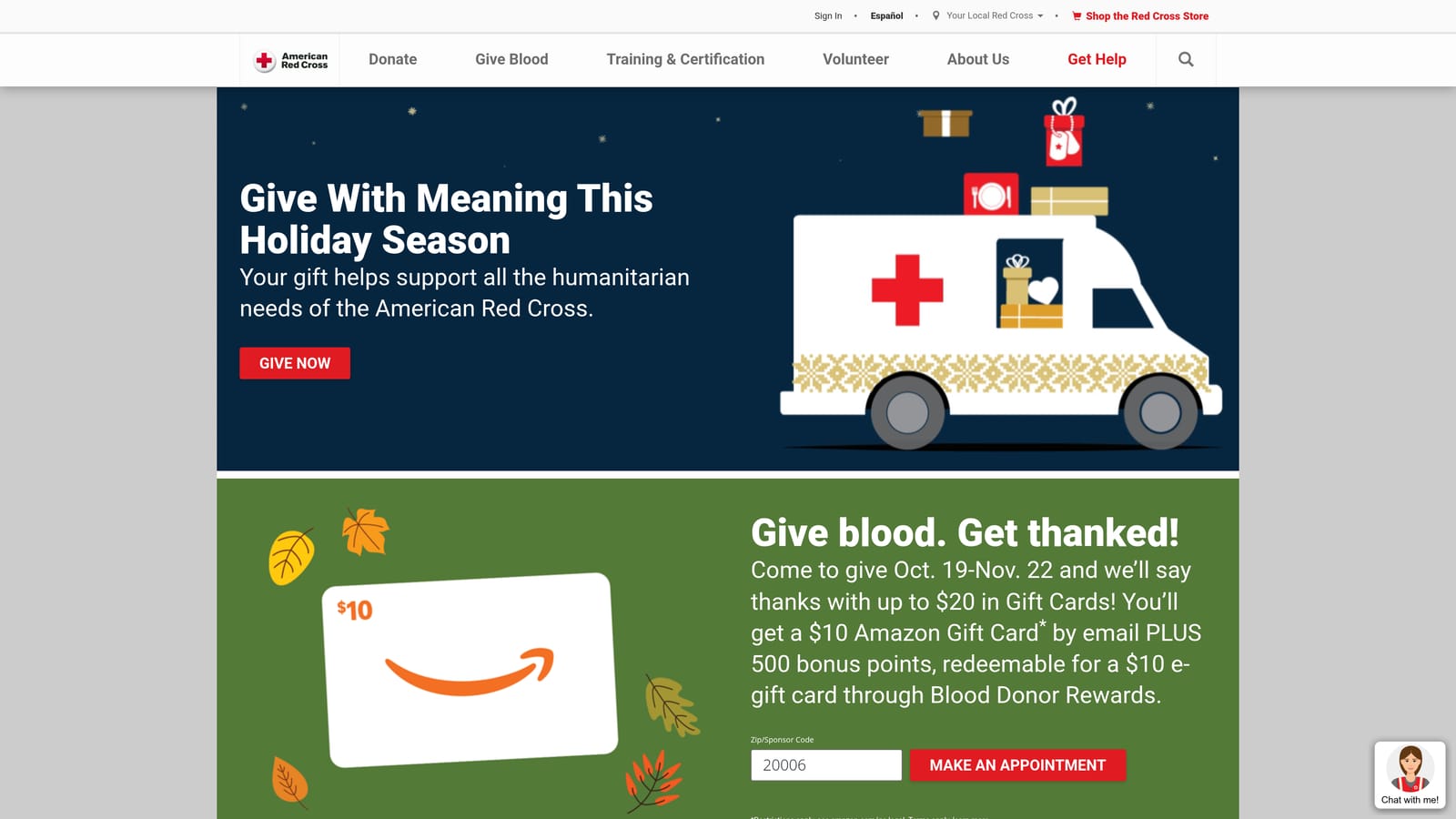
Its edge over the rest of the list is discoverability and public recognition. Schools, camps, pools, and offices frequently specify Red Cross certification, and the course finder makes it straightforward to see what is available by format and date.
- Adult and Pediatric First Aid/CPR/AED combined courses that cover the usual childcare and workplace requirements.
- Basic Life Support for healthcare-level responders.
- Online, blended, and classroom options, so you can trade time against hands-on practice.
- A course finder that shows local sessions without phone calls.
- Digital certificates you can retrieve and share with an employer quickly.
Workplace and school programs plug into its online learning platform, and many organizations manage enrollment through an HR or safety contact. As with the AHA, many classes are delivered through authorized providers, not by Red Cross staff directly.
The limitation is clinical acceptance. Some healthcare employers require AHA BLS specifically, so a Red Cross BLS card may not be enough for a hospital job even though it is well regarded elsewhere. Pricing varies by course and format; check current rates as of November 2026 before booking.
Best for: Teachers, childcare staff, lifeguards, and general workplace responders.
4. American Safety & Health Institute (ASHI)
ASHI is a training program network offering CPR, First Aid, and BLS courses, largely delivered through independent training companies. It is built for employers and organizations that want instruction at their own site.
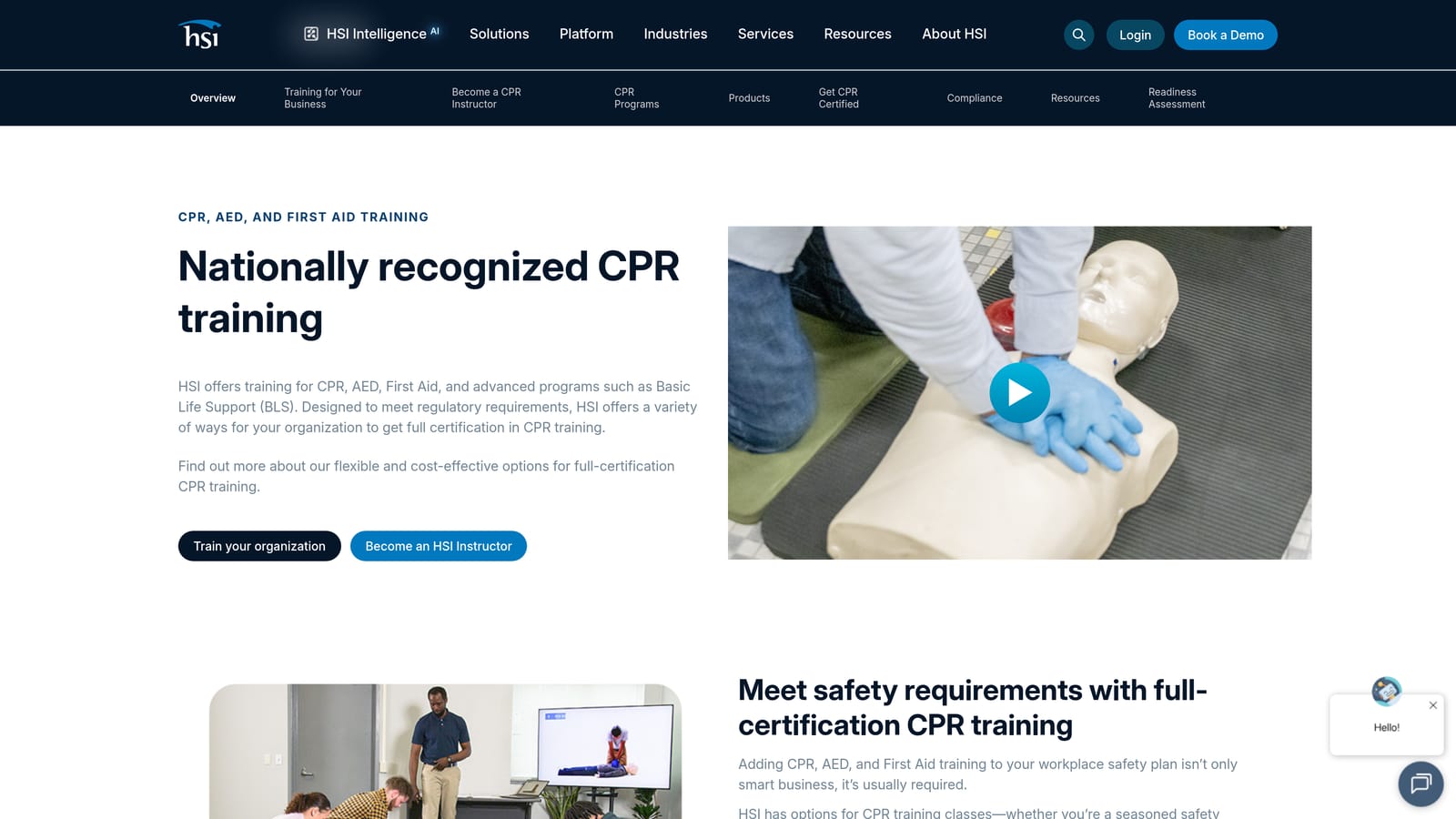
Its distinguishing quality is the workplace orientation. Because courses run through independent companies, scheduling an instructor to visit your facility and certify a shift or department is a normal arrangement, not a special request.
- CPR and AED courses that satisfy many general workplace requirements.
- First Aid training for teams that need injury and illness response skills.
- BLS for staff who need healthcare-level instruction.
- Instructor-led classes with hands-on practice and skills evaluation.
- Workplace programs that bundle courses for groups.
There is no single storefront to buy from. You contract with an independent training company that teaches ASHI courses, so the experience depends on who you hire, and the person running it day to day is usually the employer's safety or HR coordinator.
The main caution is acceptance. It varies by licensing board and employer, so clinical staff in particular should ask before enrolling. Pricing is quote-based and set by the training provider; ask for per-person rates, minimum group sizes, and whether card fees are included.
Best for: Employers arranging on-site group training.
5. National CPR Foundation
The National CPR Foundation is an online-focused provider of CPR, First Aid, and BLS certification built around self-paced courses. It targets people who need a certificate quickly and whose employer allows online-only training.
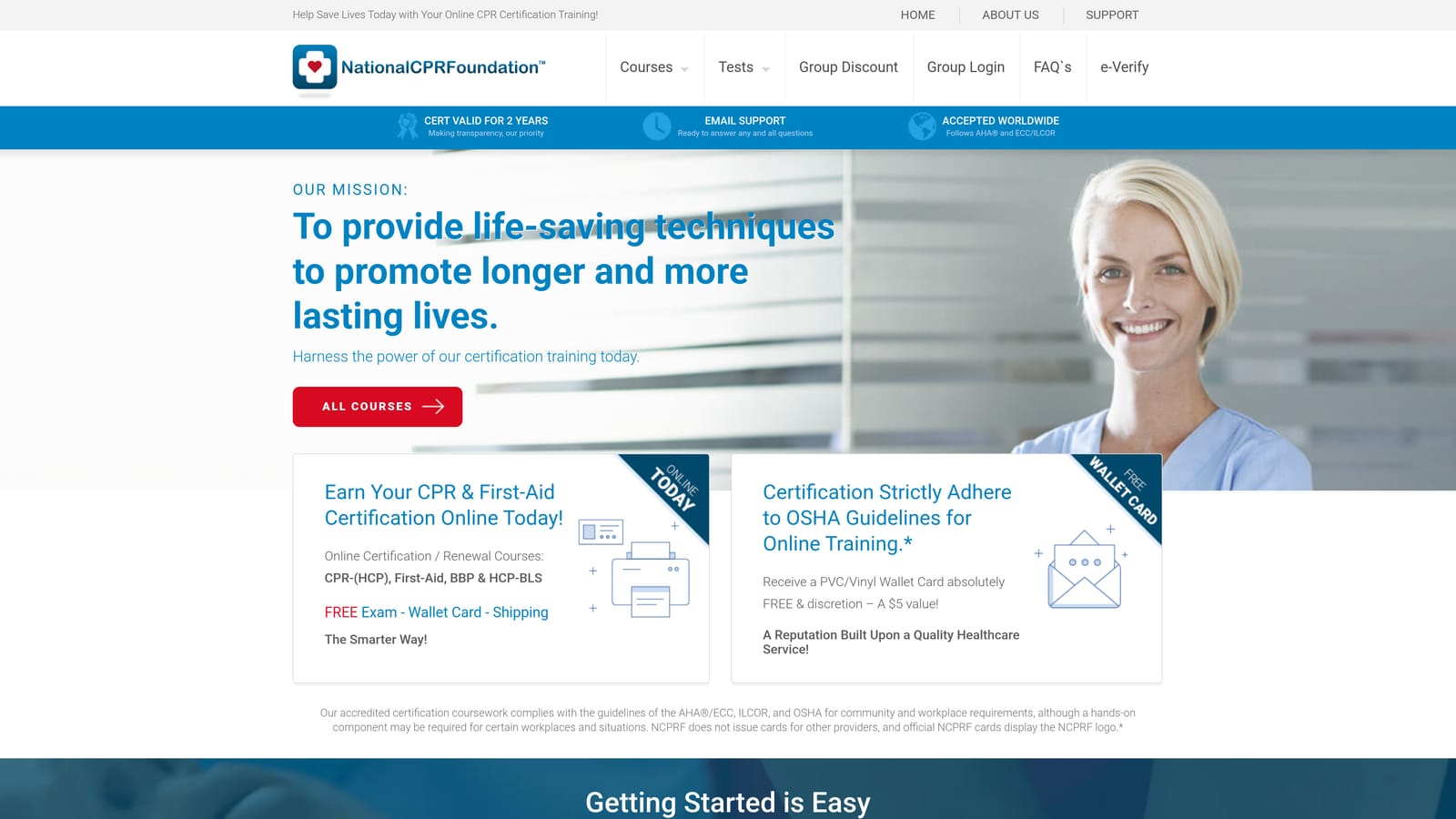
Its advantage is speed and flexibility. You can study on your own schedule through the online portal and receive a certificate quickly, which suits volunteers, some personal-use certifications, and roles with no hands-on requirement.
- Online self-paced courses you can complete in sessions that fit your day.
- CPR and AED content for lay rescuers.
- First Aid modules for general emergency response.
- BLS offerings for those whose employers accept them.
- Quick certificate delivery once the course is complete.
Setup is minimal: register, work through the modules, and download your card. No instructor or equipment is involved, which is also the central weakness.
A fully online course with no hands-on skills check is often not accepted by healthcare employers or licensing boards, and some non-clinical employers refuse it too. Never assume online-only satisfies a requirement; get written confirmation first. Pricing is listed on the provider's website and may change, so verify the current fee and card validity.
Best for: Learners needing non-clinical certification where online-only is permitted.
6. Emergency Care & Safety Institute (ECSI)
ECSI provides CPR, First Aid, and AED training through a network of instructors. It is aimed at community organizations and small employers rather than hospital settings.
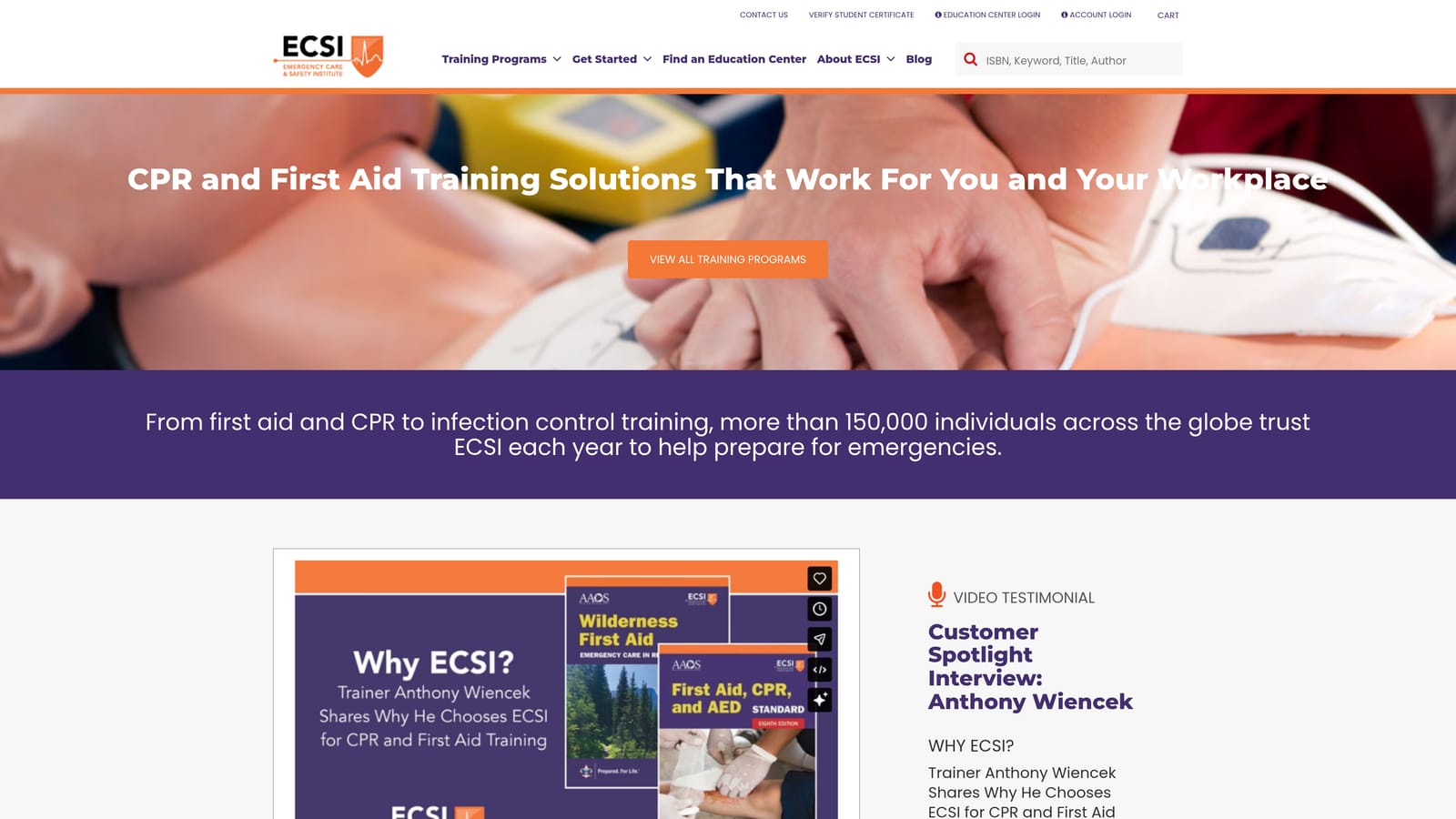
What it does well is lay rescuer training in a local, instructor-led format. Its materials are used for community classes, so a church, neighborhood group, or small business can arrange a session without engaging a large national program.
- CPR/AED courses covering adult, child, and infant response for lay rescuers.
- First Aid training for common injuries and sudden illness.
- An instructor network that offers local options.
- Community training programs suited to volunteer and neighborhood groups.
- Workplace courses for small teams with basic requirements.
Setup runs through a local instructor or training site, who handles scheduling, equipment, and cards. Quality and availability therefore depend on your area, so ask about the instructor's experience and class size.
The limitation is recognition. ECSI is less recognized by hospital employers than the AHA or Red Cross, so clinicians should look elsewhere for BLS. Pricing is quote-based and set by the local instructor; request the per-person cost and confirm what the card fee includes.
Best for: Community groups and small organizations needing lay rescuer training.
7. National Safety Council (NSC)
The National Safety Council is a safety nonprofit whose First Aid, CPR, and AED training is oriented to workplace safety programs. It is designed for safety managers who must show that a facility is prepared for emergencies.
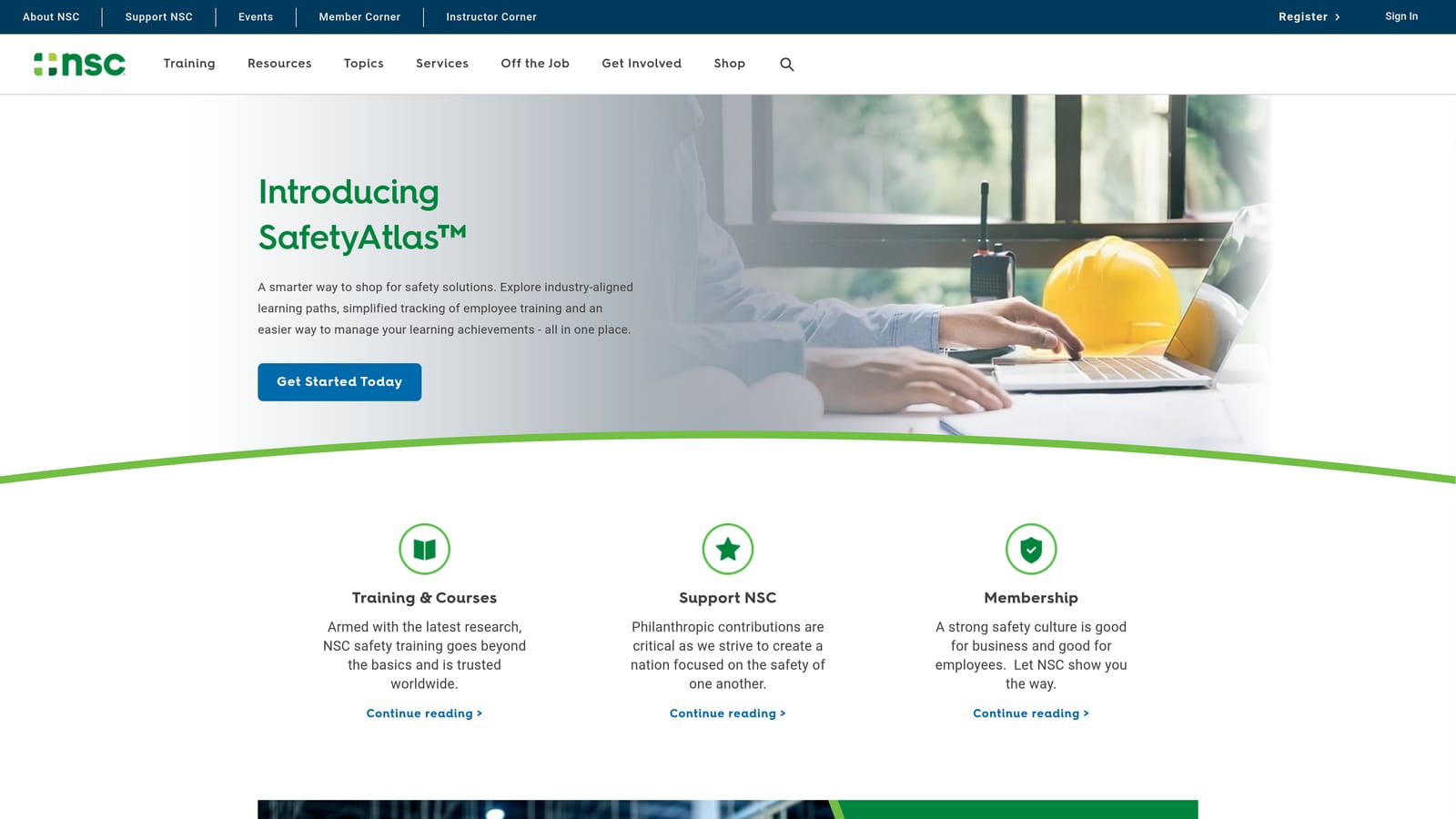
Its distinguishing feature is the occupational context. Courses sit alongside broader workplace safety resources, which suits employers aligning training with internal compliance programs and incident-response plans.
- First Aid, CPR, and AED courses built for workplace responders.
- A workplace safety focus that connects training to hazard and incident planning.
- Instructor-led training with hands-on practice.
- Employer programs for certifying teams and tracking who is current.
Training is delivered through training sites and employer programs, and the day-to-day owner is typically a safety or EHS manager who schedules classes and monitors renewals. Integration with your existing safety program matters more than any software connection.
It is less suited to individuals needing a clinical BLS credential, who should go to the AHA or confirm what their employer accepts. Pricing is listed on the NSC website and varies by course and site, so request current figures for group sizes.
Best for: Safety managers building workplace emergency response programs.
8. Health & Safety Institute (HSI / MEDIC First Aid)
The Health & Safety Institute provides CPR, First Aid, AED, and BLS courses, including MEDIC First Aid programs used by schools and businesses. It is designed for childcare providers, school staff, and employers who want flexibility without giving up hands-on practice.
Its standout is blended learning: learners finish the knowledge portion online, then attend an instructor skills session. That model cuts classroom time while still providing the hands-on check many childcare licensing rules expect.
- MEDIC First Aid programs tailored to schools, childcare, and general workplaces.
- CPR, AED, and BLS courses across lay and healthcare levels.
- Blended learning that shortens the in-person portion.
- Instructor-led classes for groups that prefer a full classroom session.
- Childcare and school programs that cover pediatric emergencies.
Courses run through a network of training providers and an online learning platform, so you register online and book a skills session locally. Childcare directors often coordinate it for a whole staff.
Acceptance for clinical roles varies, so confirm with your employer or board before enrolling, particularly for BLS. Pricing varies by training provider; compare the online portion and skills session fees together, since they may be billed separately.
Best for: Childcare providers and school staff wanting blended training.
Matching a Provider to Your Requirement
Three situations cover most decisions. Clinical staff should start with the AHA, since many hospitals and programs name AHA BLS explicitly. Childcare and school staff can often use Red Cross or HSI programs, with HSI's blended format helping when schedules are tight. Employers certifying a team can compare group training from Midwest CPR Center, particularly for Midwest workplaces that want local, hands-on instruction, alongside workplace-focused options such as ASHI and NSC.
Whatever you choose, confirm acceptance with your employer or licensing board before paying, and ask what format, hands-on skills check, and card validity they require. Prices and policies change, so verify current details with each provider.
Don't wait until an emergency happens: equip yourself and your team with life-saving skills today. Schedule your CPR certification class now and gain the confidence to respond when every second counts.